More than a thousand researchers and experts participated in the new format of the research conference. The program of the event included sections, round tables, expert discussions and trend sessions in various areas, including: psychological construction of a collective image of the future, the future of the research industry, the technological future, the consumer market 2050, promising competencies, mental well-being, migration processes, transformation of childhood and the future of the family, digitalization of the elderly population, etc.
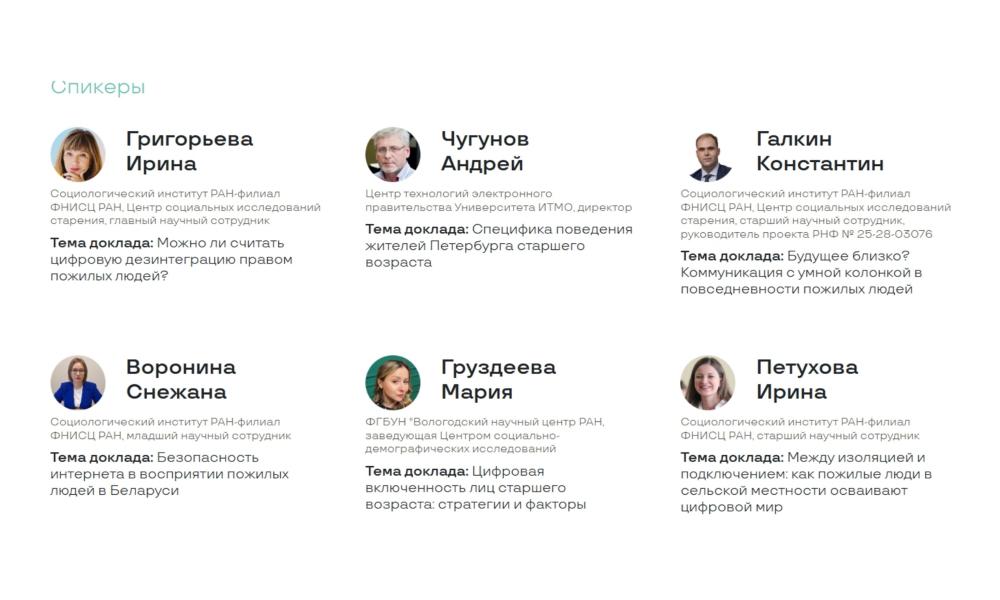
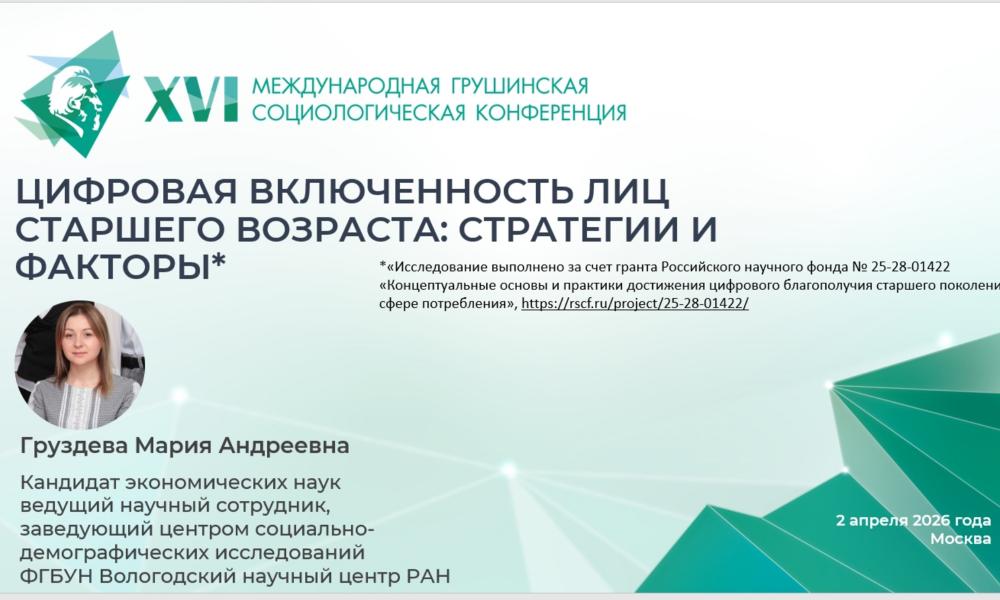
The research results of the VolSC RAS are presented at the section "Digital integration of the elderly: prospects and problems" within the framework of Track 3. "Institutions and social practices: trends and development scenarios".Maria Andreevna Gruzdeva's report presents an analysis of the factors identified during the project that determine the digital inclusion of older people, significant among which were age (the study group itself is extremely differentiated), marital status, employment in the context of digitalization, trust, marital status and cohabitation with representatives of other generations (children, grandchildren). The strategies of digital inclusion are formulated, reflecting the differentiation within the group of older people in terms of the level of digital skills, the frequency of Internet use, and attitudes towards digital technologies as a component of subjective well-being.
Following the results of the Grushinsky Conference-2026, it is planned to prepare and publish an analytical report that will reflect current trends and answer questions about how our society sees the future, how it creates it, and what needs to be done to achieve the desired future. The main conclusions of the section will become part of it.
The study was funded by the Russian Science Foundation grant No. 25-28-01422 "Conceptual foundations and practices for achieving the digital well-being of the older generation in the consumer sector."